From Yarn to Finished Roll: Our Circular Knitting Manufacturing Process.
Yarn enters the circular knitting machines for fabric formation while integrated visual monitoring follows the fabric surface and production status in real time. When broken yarn or visible knitting abnormalities are detected, the machine can stop for intervention. After knitting, the fabric is cut and formed into rolls, followed by human re-inspection, AGV transport, weighing and robotic handling before storage and delivery preparation.
How a Fabric Roll Moves Through the Workshop, from Yarn Feeding to Storage.
Once yarn specification, gauge, machine diameter, target GSM and finished width are confirmed, yarn enters the circular knitting process. Machine monitoring, human quality confirmation and automated material movement then support different stages until the finished roll is weighed, handled and stored.
01
PRODUCTION STAGE
Yarn Preparation & Machine Setup
Before production starts, the yarn specification, target fabric construction, gauge, machine diameter, GSM and finished width are confirmed. Yarn is then guided from the creel into the circular knitting machine under the selected production setup.
02
PRODUCTION STAGE
Circular Knitting
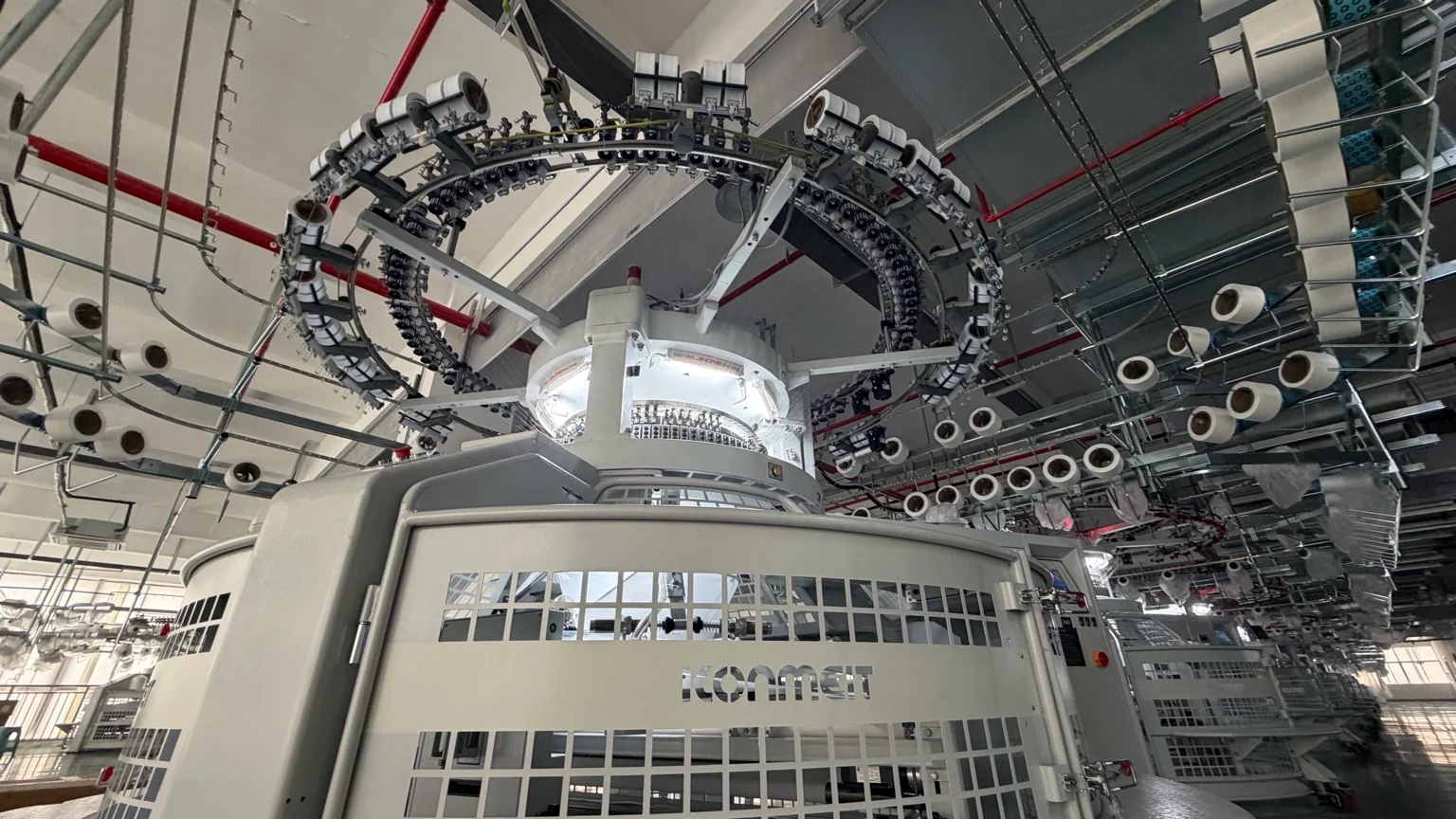
Inside the circular knitting machine, yarn is continuously formed into knitted fabric. Machine conditions are set around the confirmed construction and target specification while the knitting process runs under continuous monitoring.
03
PRODUCTION STAGE
Real-Time Visual Monitoring & Stop-on-Fault
Integrated visual monitoring observes the fabric surface and production status during knitting. When broken yarn or visible knitting abnormalities are detected, the machine can stop for intervention so the issue does not continue through a larger section of fabric.
During knitting · machine-integrated monitoring
04
PRODUCTION STAGE
Cutting & Roll Formation
After the knitting run is completed, the fabric moves through cutting and roll formation. The fabric is prepared as a roll for subsequent inspection, material handling and storage.
05
PRODUCTION STAGE
Human Re-inspection & Roll Confirmation
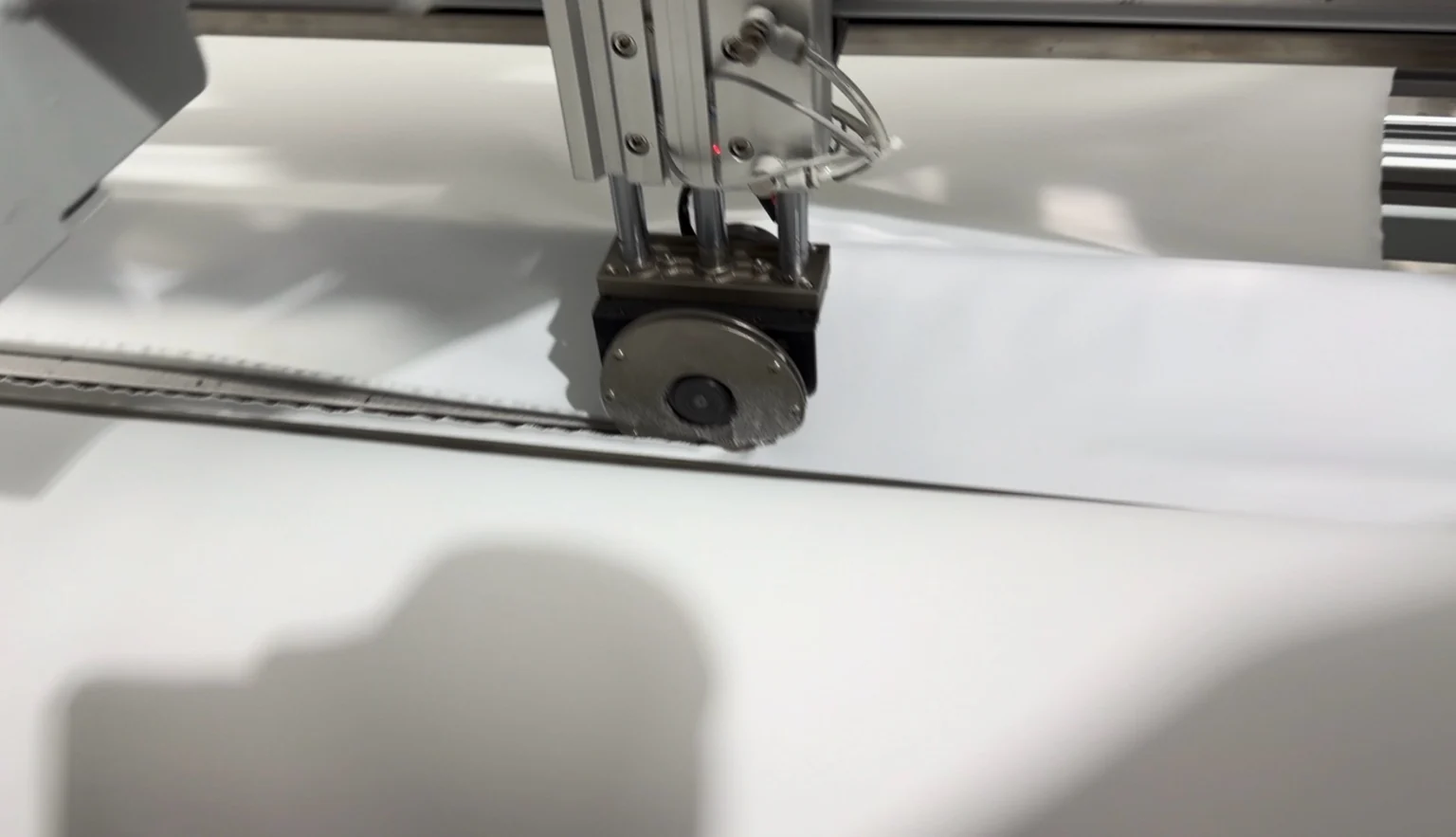
After roll formation, the fabric surface is checked again by a person for visible appearance and knitting conditions that require human confirmation. Machine monitoring and human re-inspection operate at separate stages of the production process.
After roll formation · human re-inspection
06
PRODUCTION STAGE
AGV Transfer, Weighing & Robotic Storage
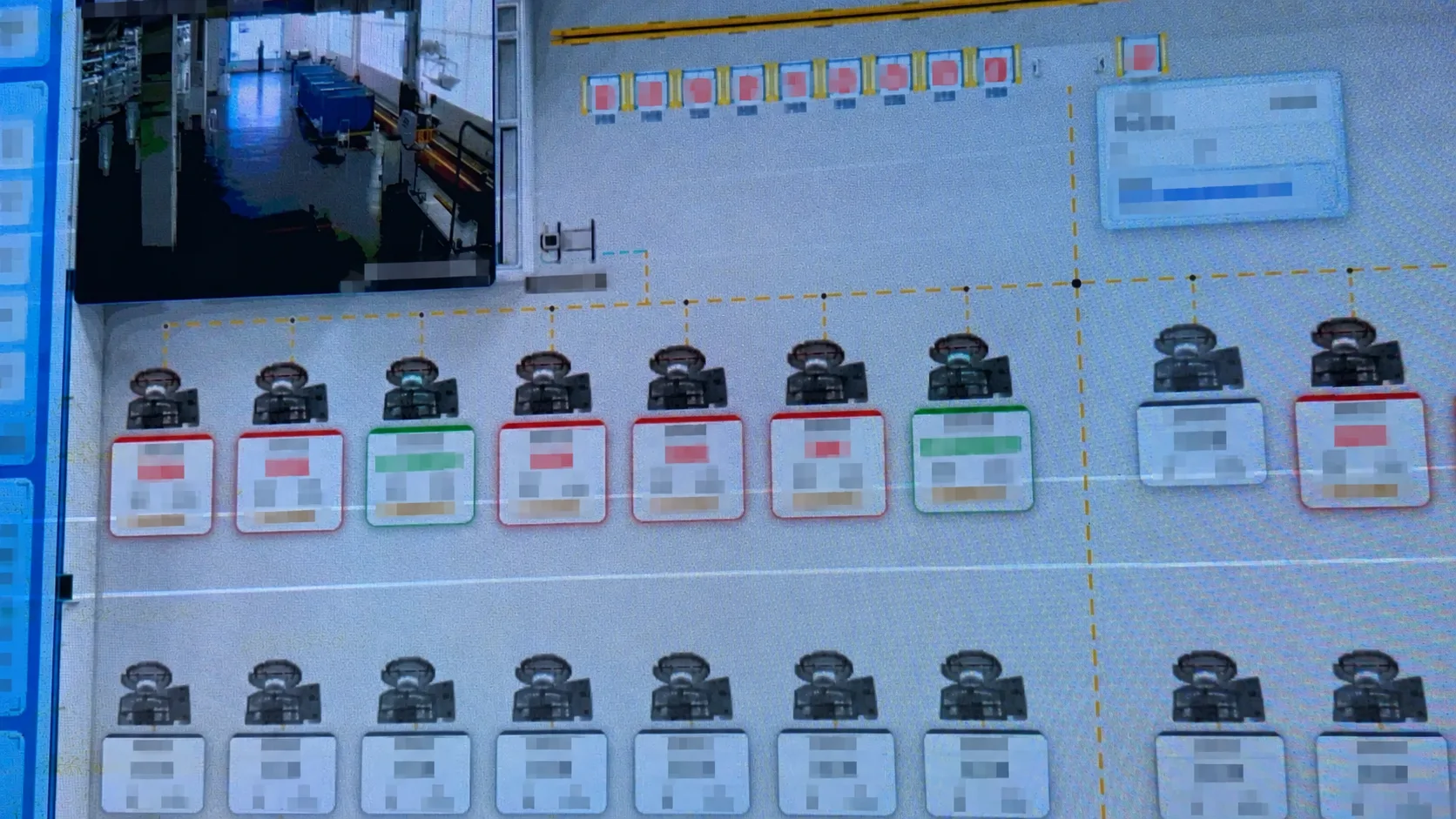
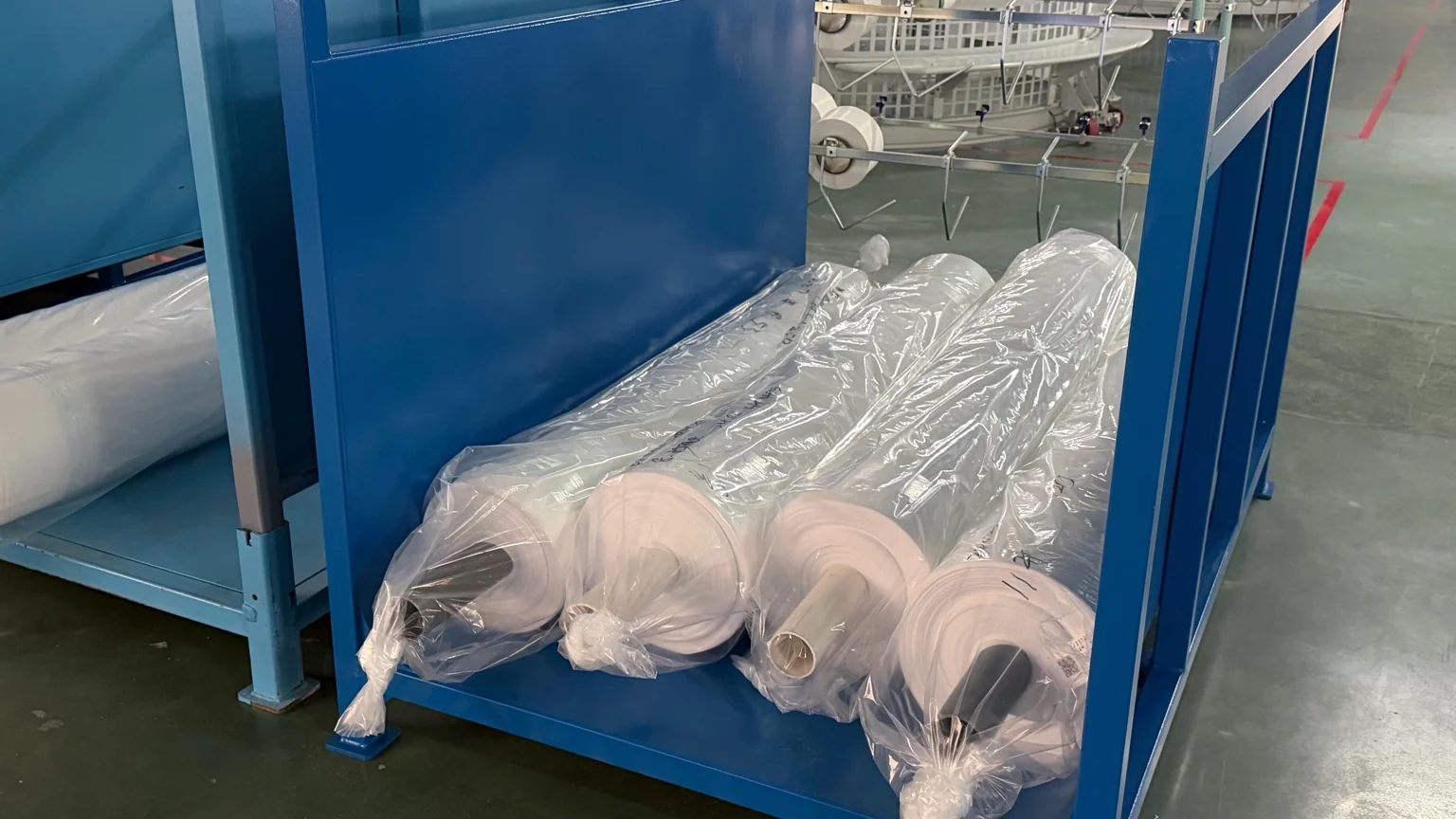
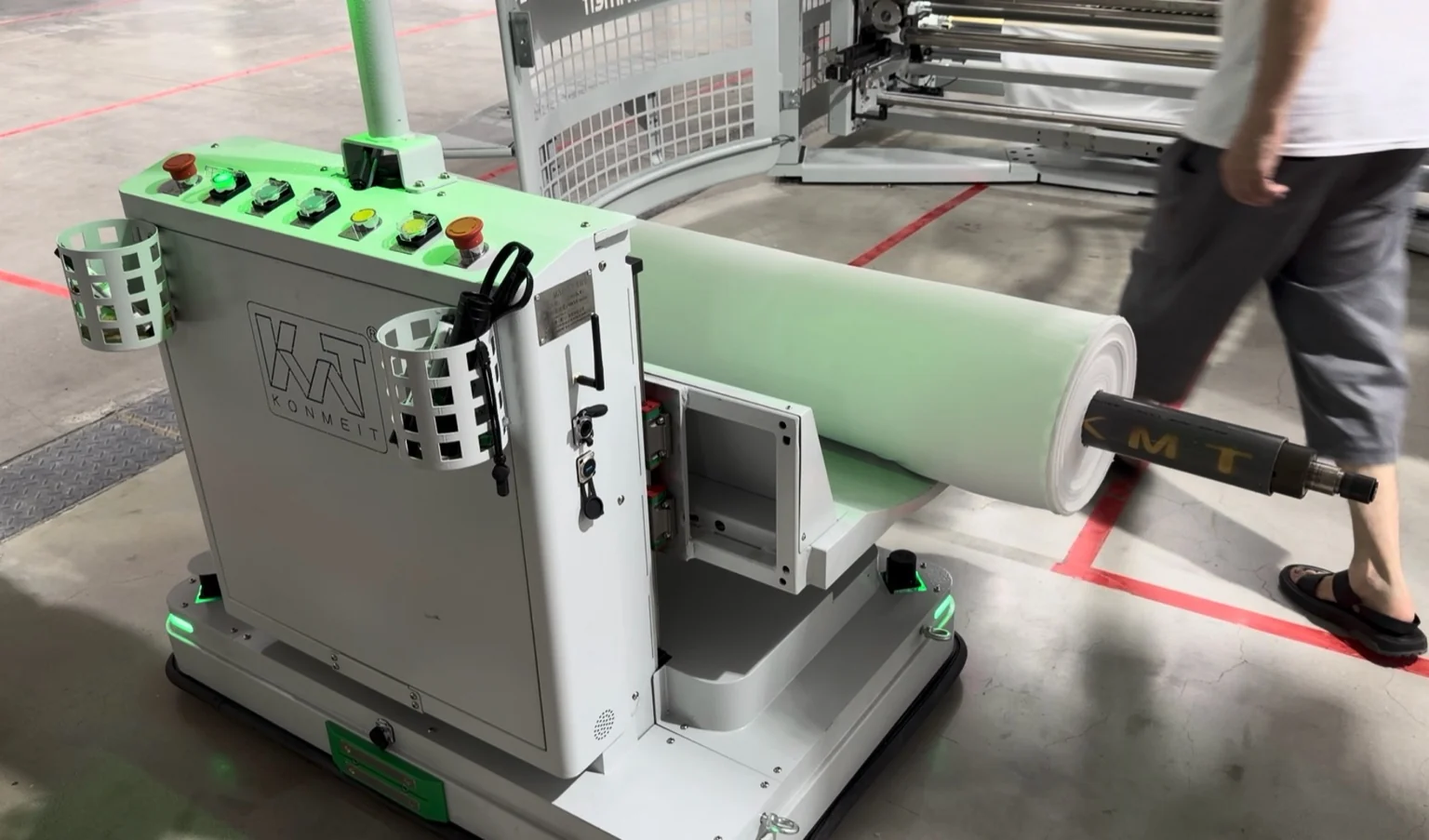
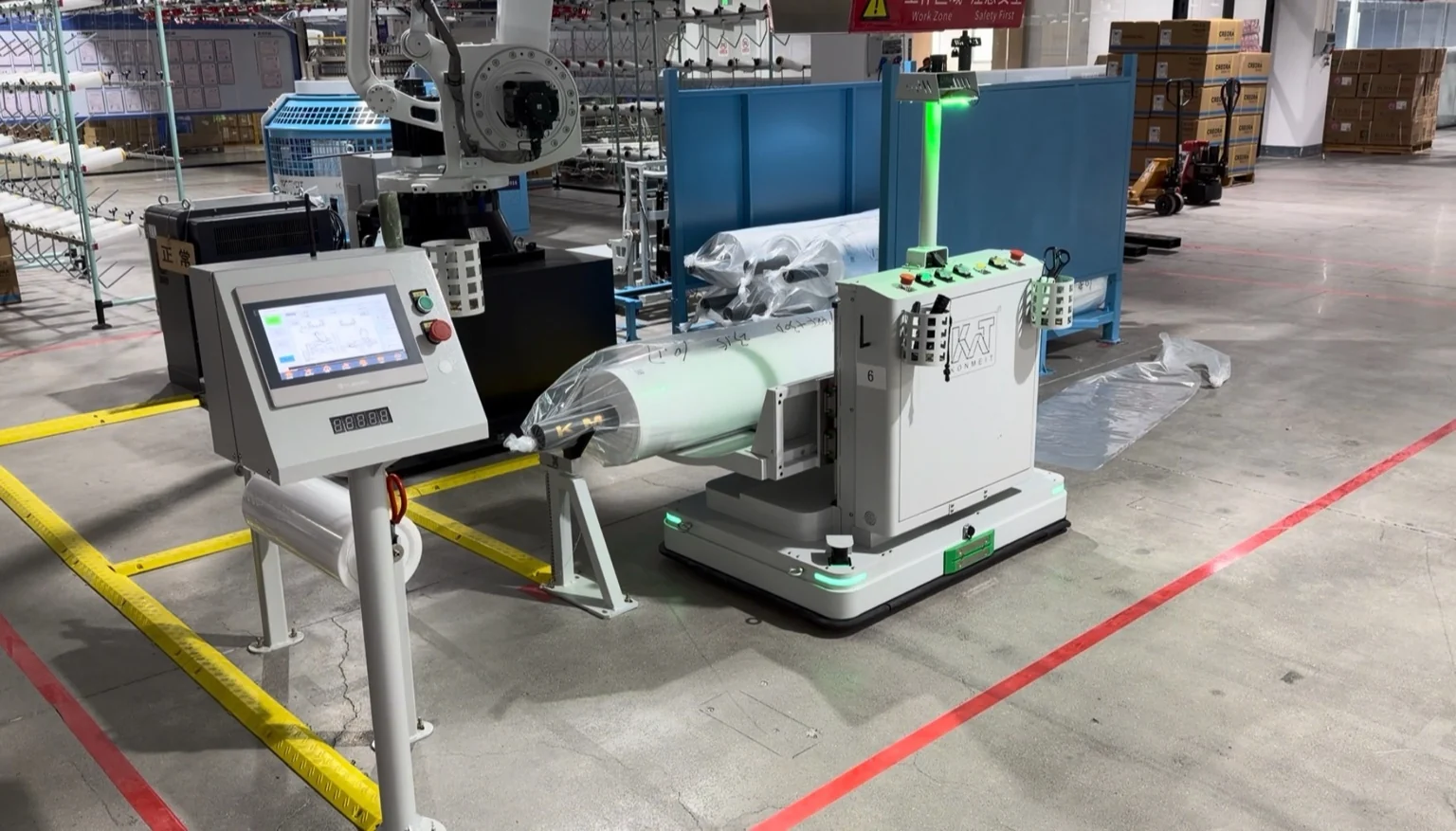
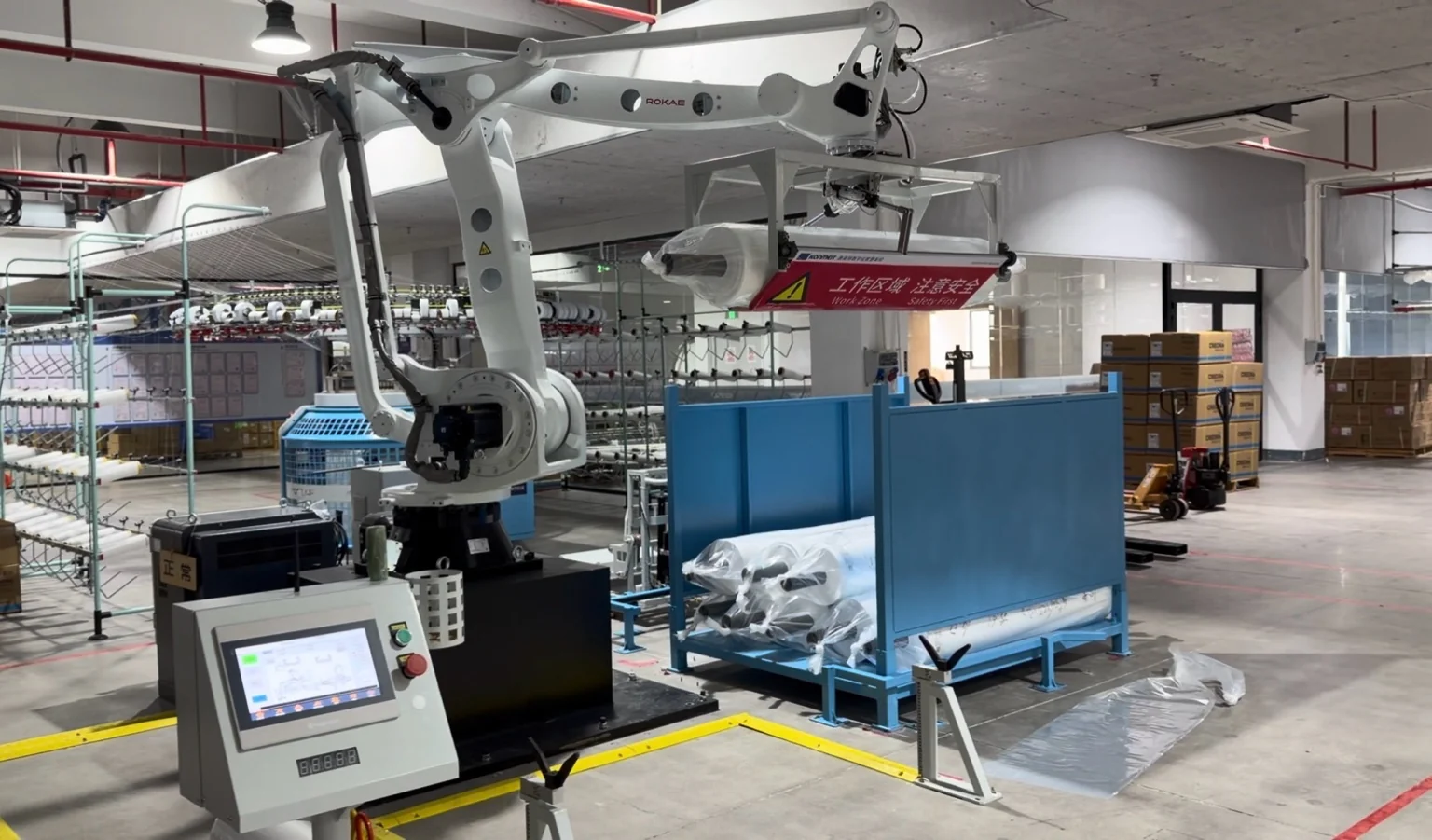
After re-inspection, AGVs move finished rolls through the workshop to the weighing and robotic-handling station. Once weighing is completed, robotic handling supports roll transfer and storage, reducing repeated manual carrying and keeping post-knitting material movement connected.
QUALITY CONFIRMATION
Two Quality Checkpoints.
Machine-integrated monitoring supports earlier detection of broken yarn and visible knitting abnormalities during production. Human re-inspection after roll formation provides a separate fabric-surface confirmation step.
AUTOMATION & MATERIAL MOVEMENT
What Automation Handles in the Workshop.
Automation at WONJEAN is used primarily for production monitoring and finished-roll movement. Circular knitting is monitored during operation, while AGVs, weighing and robotic handling connect finished rolls with storage. Automation reduces repeated manual transfers, while final fabric-surface confirmation still includes human re-inspection.
Production monitoring
Circular knitting is monitored during operation so production status and visible abnormalities can be observed at the machine stage.
AGV movement and weighing
Finished rolls move through the workshop by AGV and connect with the weighing station before storage handling.
Robotic roll handling
A robotic handling station supports roll transfer and storage after weighing.
HOW A PROJECT STARTS
From Reference Fabric or Specification to Bulk Production.
A physical reference, yarn specification, target composition, GSM, width or intended application can be used as the starting point. Once the development direction and sample specifications are confirmed, the project can move into bulk-production planning and delivery coordination.
01Reference / specification
02Development direction
03Sample & specification confirmation
04Bulk scheduling
05Delivery coordination
WORKSHOP MEDIA
Workshop Media
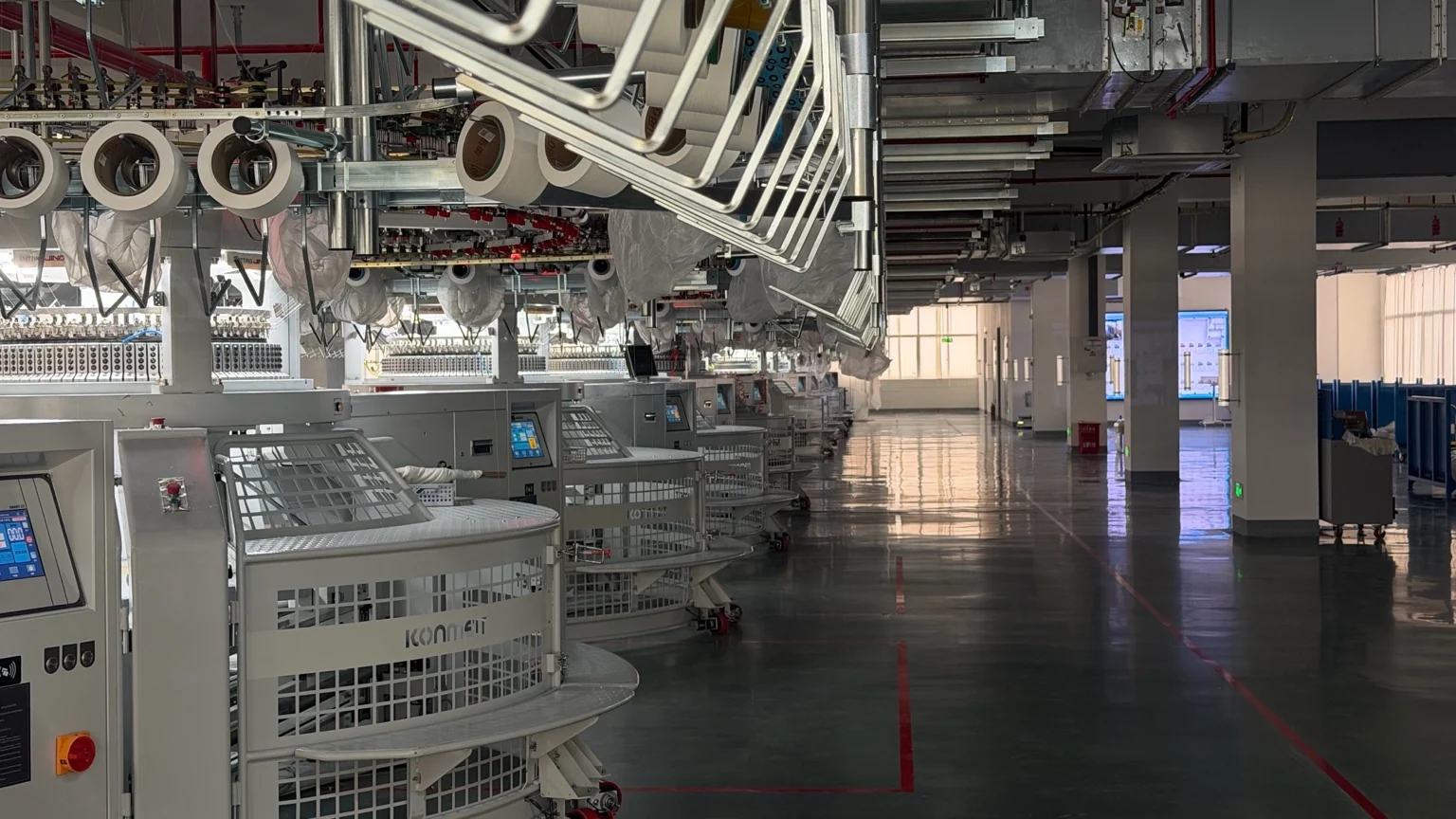
Workshop overviewA view of the workshop environment and knitted-fabric production areas.
Circular knitting in operationThe knitting floor and circular machines in operation.
Finished-roll handlingFinished rolls moving into the next handling stage.
START A FABRIC CONVERSATION
Discuss a fabric target with WONJEAN.
Share a reference fabric, yarn specification, target GSM, width, hand feel or intended application through the inquiry form.